The Complete Guide to Choosing Kitchen Sinks & Taps in Ireland
For most Irish residential kitchens, a 304-grade stainless steel single bowl inset sink with a minimum bowl depth of 200mm paired with a single-lever mixer tap is the most commonly specified combination. Cabinet interior width is the primary constraint — a 500mm cabinet accommodates most single bowl sinks, while double bowl configurations require 800mm or wider. Undermount sinks require solid surface worktop materials such as granite, quartz or compact laminate — see our worktops and panels guide for compatible materials.
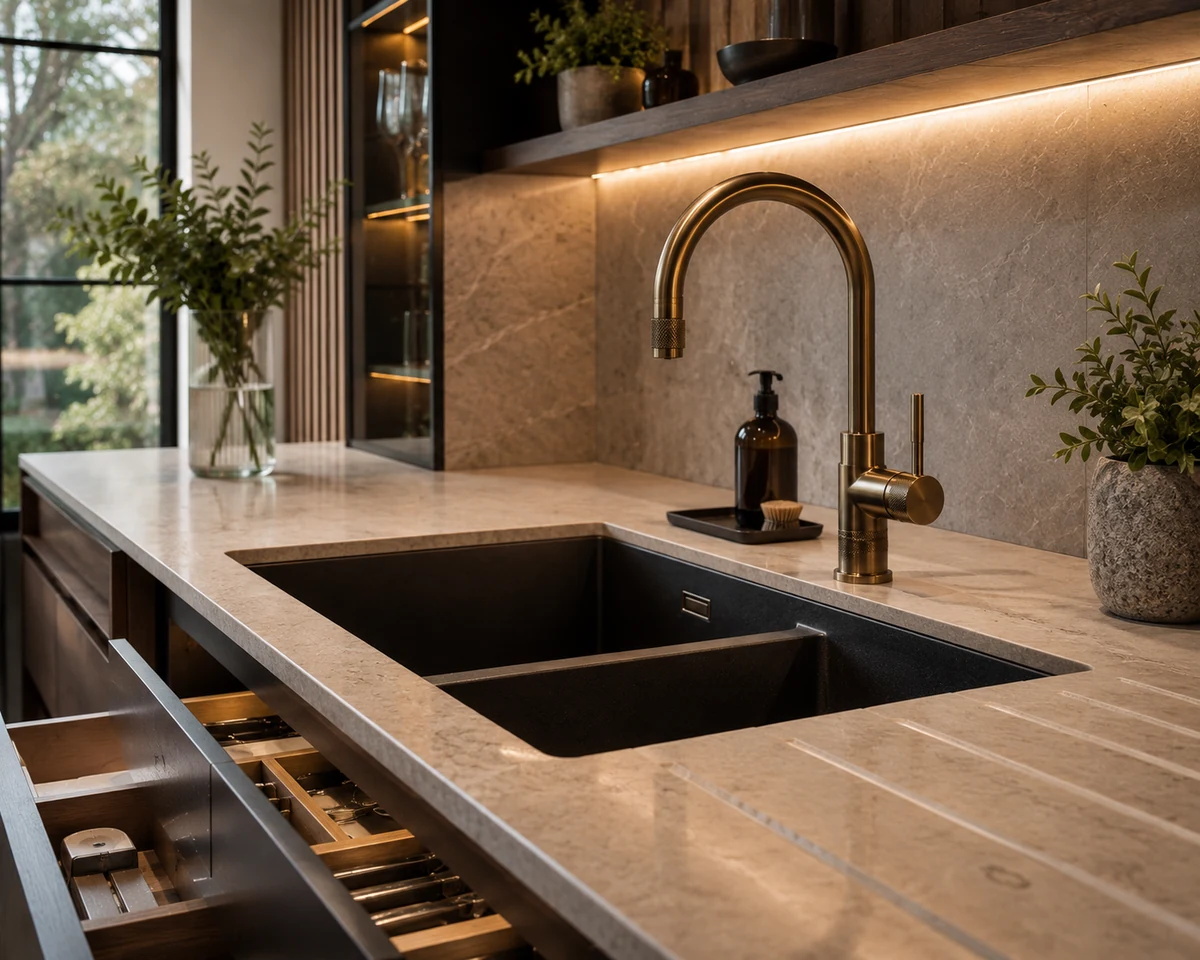
How to Choose a Kitchen Sink
- Kitchen footprint: compact layouts suit single bowl sinks; larger installations can specify double bowl or Belfast configurations
- Cabinet requirements: a 500mm cabinet is the minimum for most single bowl sinks; double bowl configurations require 800mm or wider
- Usage profile: deep single bowls (200mm+) suit large cookware; double bowls separate washing and rinsing workflows
- Worktop allocation: maintain adequate preparation zones either side of the sink cutout
- Specification tier: inset sinks are most cost-effective; undermount installations command a premium but deliver a seamless flush junction
Bowl Configurations
Single Bowl Sinks
Single bowl sinks offer maximum usable bowl capacity, accommodate large trays and commercial cookware, and are suitable for compact cabinet specifications.

Double Bowl Sinks
Double bowl sinks provide separate washing and rinsing zones, improve workflow efficiency, and are commonly specified for high-usage installations. They require a minimum 800mm cabinet.
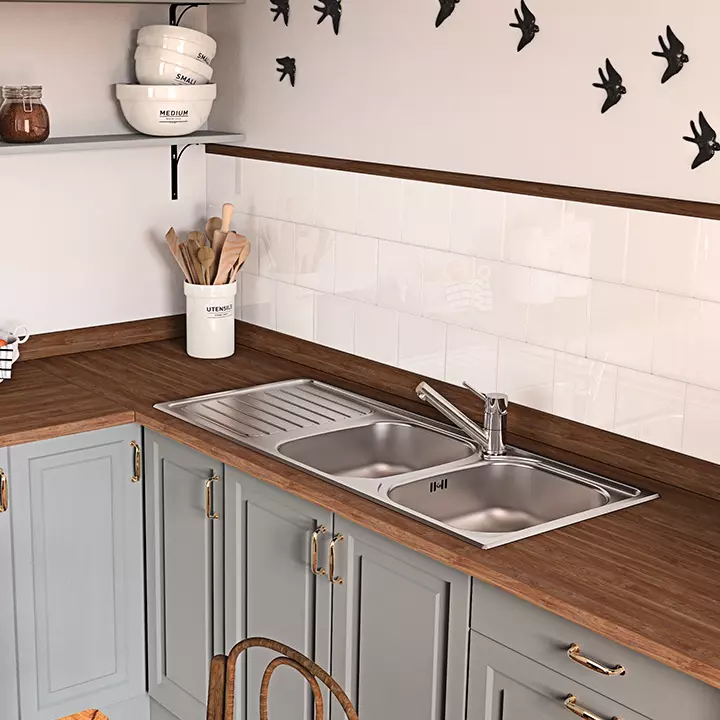
Inset vs Undermount Sinks
Inset Sinks
Inset sinks are compatible with all worktop materials including laminate, drop into the cutout with a visible rim, and are straightforward to install. They are the most cost-effective specification and are commonly used in renovation projects.
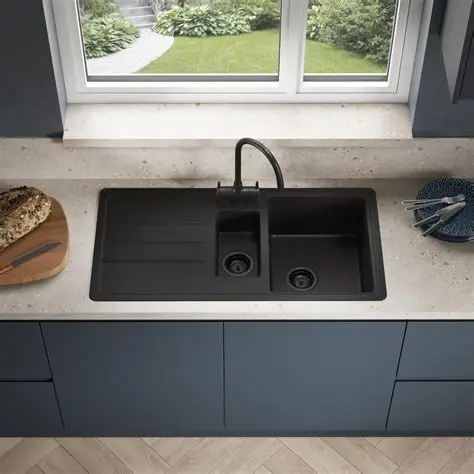
Undermount Sinks
Undermount sinks are mounted beneath the worktop creating a flush junction with no visible rim. They require solid surface worktop materials (granite, quartz, solid surface or compact laminate) and deliver a premium architectural specification with simplified worktop hygiene.
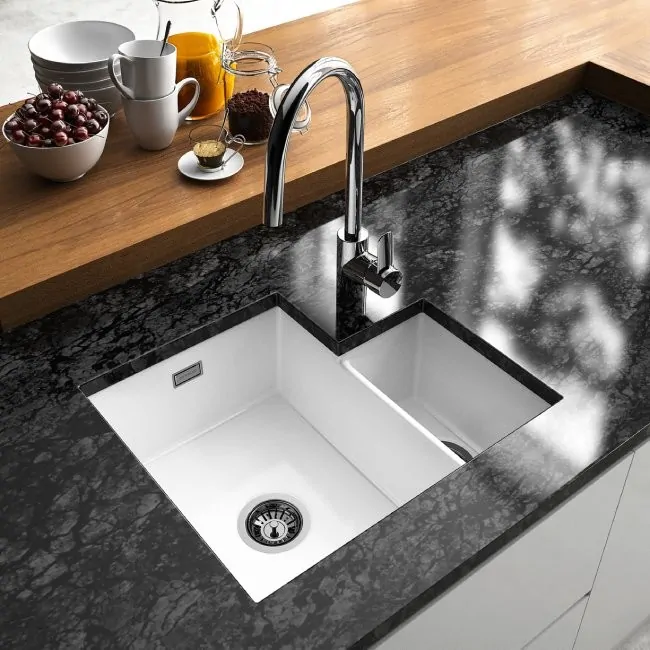
Tap Types
The right tap specification improves daily functionality. Mixer taps are the most common choice, but pull-out spray taps offer significant advantages for rinsing and cleaning. For boiling water on demand, consider a Quooker tap — browse our Quooker range for specification details.
- Mixer taps: single-lever blending of hot and cold water — the most common specification for modern kitchens
- Pull-out spray taps: retractable spray head for directed water flow — ideal for rinsing cookware and cleaning the sink bowl
- Contemporary taps: sleek geometric designs with square or cylindrical spouts for architectural kitchen schemes
- Traditional taps: classic pillar and bridge designs for period-style installations
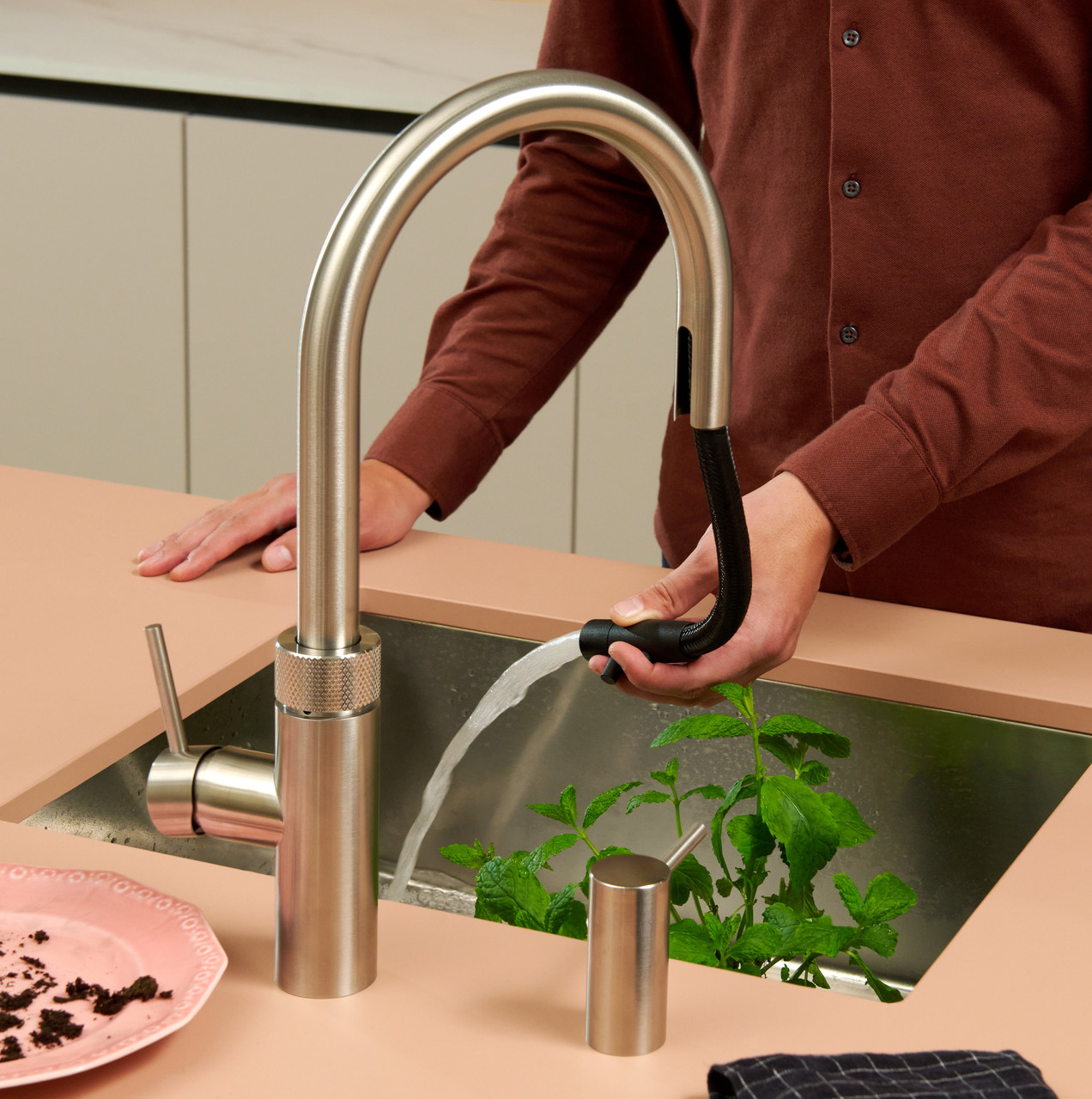
Recommended Sink and Tap Combinations
- Compact installation: single bowl sink with compact mixer tap — maximises limited worktop area
- High-usage kitchen: double bowl sink with pull-out spray tap — separate washing and rinsing zones
- Contemporary specification: undermount sink with contemporary mixer tap — seamless flush junction with minimalist styling
- Renovation project: inset sink with multi-function mixer tap — compatible with existing laminate worktops
Frequently Asked Questions
What is the most commonly specified kitchen sink?
For most residential installations, a 304-grade stainless steel single bowl inset sink with a minimum bowl depth of 200mm is the most commonly specified option. It accommodates large cookware, is compatible with all worktop materials, and offers straightforward maintenance.
Should I specify a single or double bowl sink?
Specify a single bowl sink where large cookware is in regular use, where cabinet width is limited, or where maximum bowl capacity is the priority. Specify a double bowl sink where concurrent washing and rinsing is required, or for high-throughput installations. Double bowl configurations require a minimum 800mm cabinet.
What is the difference between an inset and an undermount sink?
An inset sink drops into a worktop cutout with a visible rim and is compatible with all worktop materials. An undermount sink is mounted beneath the worktop creating a flush junction with no visible rim, and requires solid surface worktop materials such as granite, quartz or compact laminate.
Can I specify an undermount sink with any worktop material?
No. Undermount sinks require a solid, structurally rigid worktop material — granite, quartz, solid surface, or compact laminate. Standard laminate worktops are not suitable because the exposed chipboard core at the cutout edge is vulnerable to moisture ingress.